The Intimate Frequency: Why the Human Voice Now Outranks the Image in Private Luxury
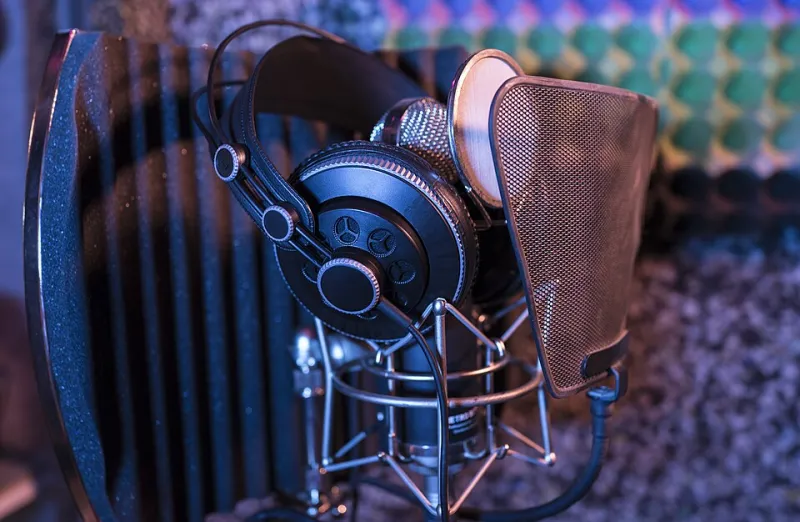
Photo: WillSpirit SBLN willspirit, CC0, via Wikimedia Commons
For roughly two decades, the premium end of adult entertainment has organized itself around the photograph. Resolution, lighting, the flawless still frame — these were the measures of quality, and subscribers learned to judge a platform by how closely its imagery approached the cinematic.
In 2026, a different measure is asserting itself at the top of the market: how a platform sounds.
Voice notes, audio erotica, and personalized recordings are no longer novelty features bolted onto a subscription. They are becoming the defining luxury of private memberships — and the reasons are as much psychological as technological. Sound does something the image cannot. It enters a room without announcing itself. It arrives through headphones on a crowded train, in a parked car, in the fifteen quiet minutes before sleep. It is, by its nature, a private channel.
What follows is not a forecast about hardware but an observation about taste — and about the preferences of American subscribers who want discretion without distance.
Sight Surveys; Sound Inhabits
The eye is a surveying organ. It scans, compares, catalogs, and holds the world at a certain distance. The ear is an immersive one. Hearing places the world inside the skull, which is why a familiar voice on a telephone can unsettle a person more thoroughly than a familiar face across a room.
A photograph, however beautiful, remains an object. It can be saved, reposted, screenshotted, stolen. A recording is closer to a presence. It carries breath, hesitation, accent, and the small irregularities that mark a person as specific rather than generic. When a subscriber receives a recording addressed to them by name — made for them, not merely sent to them — the sensation is not of viewing content but of being admitted into a conversation.
That distinction matters more now than it did a decade ago, largely because the visual market has become saturated. Capable operators everywhere can produce gorgeous imagery. What cannot be mass-produced is the impression of a single voice speaking to a single listener.
Discretion Without Distance
American life has grown acoustically complicated. Open-plan offices, shared apartments in expensive cities, family homes where a closed door is not always a guarantee. Subscribers who conduct their private lives under conditions of partial visibility are gravitating toward media that asks for nothing but hearing.
The practical logic is straightforward. Audio occupies no screen. It can be enjoyed with the lights off, on a commute, on a walk, or while doing something else entirely. But the deeper appeal is emotional, and it is here that the marketplace has historically underdelivered. Discretion and distance are not the same thing, and much of the modern industry has conflated them. A platform can be discreet without being cold. A recording can deliver presence without exposure. The members who pay the most are not asking to be kept at arm's length; they are asking to be kept close without being made visible.
The Unshareable Signal
Status in luxury has always depended on scarcity, and scarcity in digital goods is difficult to manufacture. Images are, in practice, infinitely reproducible. Voice is not. A recording made for one member, for one occasion, cannot be meaningfully reposted; it carries no information a stranger could use. It is not proof of access. It is access.
That has made audio an unexpected status marker among the discerning — a form of luxury that cannot be screenshotted into a group chat or resold on a forum. In a year when the circulation of a single image can undo a reputation, the appeal of a medium that leaves no visual residue is not difficult to understand.
What Craft Actually Requires
An industry that spent decades perfecting lighting must now learn to perfect breath. The technical demands of premium audio are considerable: clean capture, careful mastering, the elimination of room noise and compression artifacts that betray a recording as mass-produced rather than made.
The human demands are greater still. Diction, pacing, the willingness to leave a silence in place rather than fill it. The best personalized recordings are built the way a bespoke suit is built — measurements taken first, material chosen deliberately, nothing left to improvisation at the final fitting.
Restraint is the hardest discipline. A voice that overperforms becomes theatrical; a voice that withholds becomes magnetic. The most expensive sound in the world is the sound of someone speaking only to you, and the craft lies in making that impression feel effortless.
A Luxury That Leaves No Trace
The image asks to be seen. The voice asks only to be heard — and in doing so it offers something closer to what the discerning subscriber is actually purchasing: not content, but company.
This is the quiet wager of 2026. The velvet rope has always been a question of who is permitted inside. The voice is simply its newest form: a barrier made of sound, invisible to everyone except the person standing on the right side of it.