Silence, Signed in Confidence: The Quiet Aristocracy of Keeping Things Private
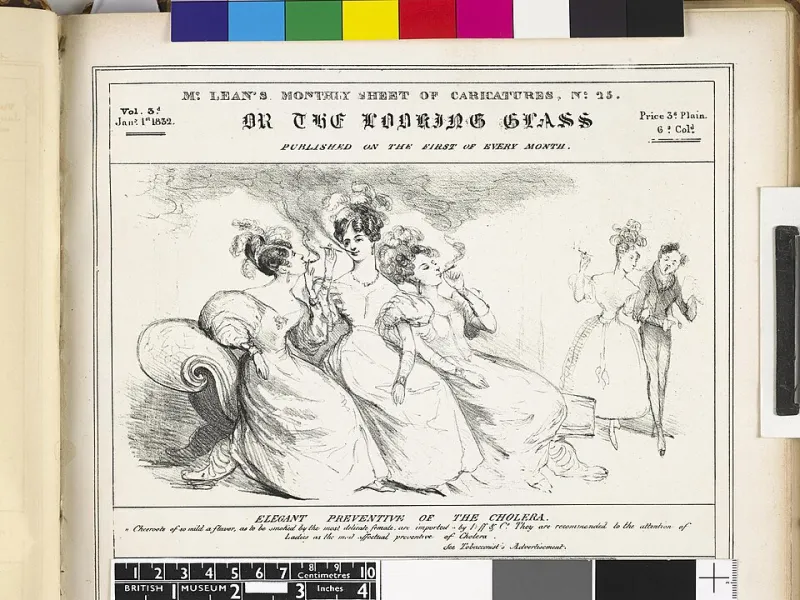
Photo: Print made by: Robert Seymour Published by: Thomas McLean, Public domain, via Wikimedia Commons
There is a particular kind of wealth that never appears on a balance sheet: the wealth of not having to explain yourself.
Consider the habits of America's genuinely privileged classes. The most sought-after restaurants in Manhattan do not advertise; they simply remember your name. The private banking floors of Charlotte and Boston are reached through unmarked elevators. The members-only clubs of Washington, D.C. are known less by their signage than by who is seen — or deliberately not seen — slipping through their doors. Across every tier of American exclusivity, the same principle repeats itself: what is truly valuable is rarely announced.
And yet, in the digital marketplace of pleasure, discretion is treated as an afterthought — a checkbox, a privacy policy, a lock icon in the browser bar. This is a profound misreading of what discerning people actually want. They do not merely want their data protected. They want their desires honored with the same confidentiality a physician, an attorney, or a private banker would extend. Anything less is not luxury. It is exposure with good lighting.
The Difference Between Privacy and Secrecy
It is worth drawing a careful line here, because the two are routinely confused.
Secrecy carries a whiff of shame — the sense that something must be buried because it could not survive the light. Privacy is something else entirely. Privacy is the confident decision that your inner life belongs to you. It is the difference between hiding and simply declining to perform.
The discerning client does not consume adult content out of shame. He or she consumes it the way a collector acquires: deliberately, personally, and without any obligation to justify the taste to anyone. What such a client requires is a space where that confidence is structurally guaranteed — where the platform itself understands that what happens within its walls is nobody's business but the member's own.
Discretion, practiced at this level, is not a feature. It is a philosophy.
Why the Loudest Rooms Hold the Least
American culture has an odd relationship with display. We are a nation built on self-made fortunes and front-porch openness, and yet our most enduring institutions of pleasure — the speakeasy, the private club, the unmarked door — have always thrived on restraint.
The explanation is psychological as much as practical. When an experience must be shared to be validated, it becomes transactional: content for approval. When an experience is held privately, it remains whole. It is not diluted by an audience. The pleasure stays between you and the experience itself, unmediated, unjudged, and therefore unrepeatable in the best sense.
There is also, frankly, the matter of dignity. The executive in Chicago, the surgeon in Denver, the small-business owner in Austin — none of them want their tastes catalogued, targeted, or leaked. They want to know that the platform they've chosen treats their membership the way a fine hotel treats a guest's name on a reservation: known internally, invisible externally.
The Whisper as a Form of Respect
Here is what most providers of adult entertainment fail to grasp: discretion is not merely defensive. It is actively pleasurable.
There is a reason the best secrets are shared in whispers. The lowered voice creates intimacy by its very mechanics — it requires closeness, it presumes trust, it excludes everyone else in the room. A platform built on the same principle produces the same effect. Every element that signals privacy — the discreet billing, the absence of public profiles, the sense of a closed circle — deepens the experience rather than merely protecting it.
This is why we believe confidentiality is the most underrated form of luxury in the American market. Anyone can sell access. Very few can sell the assurance that access leaves no trace.
A Closing Thought on What You're Really Buying
When a discerning subscriber joins a private platform, the transaction appears simple: payment for content. But that framing misses what is actually being exchanged. What is truly purchased is a relationship of trust — a standing agreement that your pleasures will be met with quality, and met with silence.
In an era when every click is harvested and every preference becomes an advertisement, that agreement is worth more than the content itself. The finest things in American life have always been handled this way. Your pleasures deserve no less.