The Credential of Desire: What Exclusive Membership Reveals About Who We Are
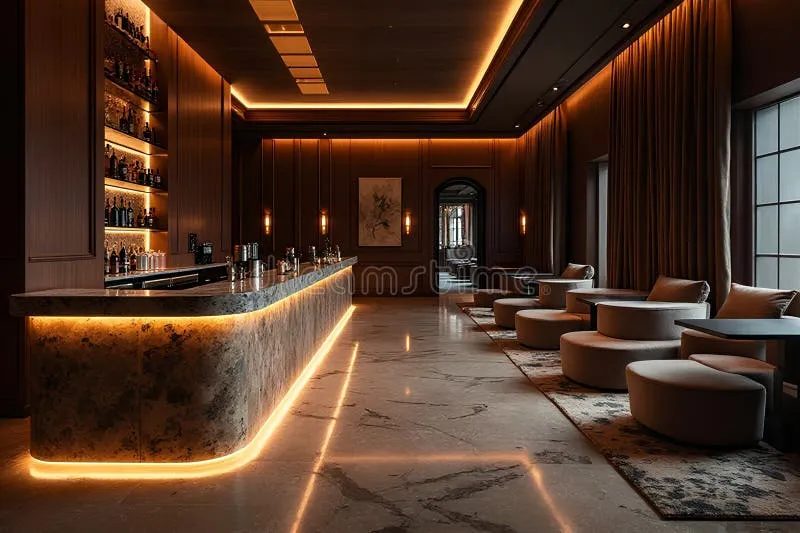
Photo: exclusive private members club interior velvet dark luxury ambiance, via thumbs.dreamstime.com
In American culture, identity has always been partially constructed through affiliation. The clubs we join, the neighborhoods we inhabit, the brands we choose — each functions as a signal, both to the world and to ourselves. Yet not all affiliations carry equal weight. The most identity-defining memberships are not those that are easy to obtain, but those that require something of us before we are admitted.
This is not mere snobbery. It reflects a deep and well-documented psychological reality: we value most what we have had to earn, and we define ourselves most clearly through the communities that do not accept everyone.
The Social Architecture of Selective Belonging
Sociologists have long studied the phenomenon of in-group identity — the way membership in a defined community shapes self-concept, behavior, and aspiration. What distinguishes exclusive communities from ordinary ones is not simply the quality of what they offer, but the meaning conferred by the process of being chosen. When access is genuinely limited, the act of gaining entry becomes a statement about who you are.
This dynamic is visible across virtually every domain of American social life. The most coveted professional associations, the invitation-only dinner clubs in major cities, the private equity networks that operate entirely through personal referral — none of these derive their value primarily from their programming. They derive it from the fact that not everyone qualifies. The credential is the community itself.
At Mia Lee VIP, we have designed our membership with this psychology at the center. Our subscribers are not simply purchasing access to content. They are affiliating with a sensibility — a particular understanding of what pleasure can be when it is treated with the seriousness and sophistication it deserves. That affiliation is itself a form of self-expression.
Scarcity as Signal
Economists have a straightforward framework for understanding why scarce things are valued: supply and demand. But this framework, while accurate, is incomplete. The value of scarcity is not only material; it is semiotic. A thing that is hard to obtain communicates something about the person who obtains it. It says: I was found worthy. I was selected. I belong here.
This semiotic function of scarcity is why luxury brands carefully manage the availability of their most coveted products, why private clubs maintain waitlists even when they have capacity, and why certain experiences are deliberately kept off the public market. The limitation is not incidental — it is constitutive. Remove the scarcity, and you remove the meaning.
For members of genuinely exclusive platforms, this dynamic produces a form of confidence that is qualitatively different from ordinary satisfaction. It is not simply the pleasure of having something good. It is the pleasure of being recognized as someone who appreciates it — someone whose taste has been evaluated and affirmed. In a culture that often reduces identity to consumption, being selected rather than simply admitted is a meaningful distinction.
Empowerment Through Vetting
There is a paradox at the heart of exclusive membership: the process of being evaluated, which might seem diminishing, is actually experienced as empowering. This is because genuine vetting — the kind that requires something real from the applicant — implies that the community takes itself seriously. A club that admits everyone is, in effect, a club that values no one. The rigor of the selection process is itself a compliment to those who pass it.
This empowerment has measurable effects on behavior and self-perception. Research in social psychology has shown that individuals who belong to high-status, selective communities exhibit greater confidence in their own judgment, are more willing to express preferences and opinions, and report higher levels of overall life satisfaction. The mechanism is straightforward: when a trusted external authority confirms that your sensibility is exceptional, you begin to trust that sensibility more fully.
For the Mia Lee VIP subscriber, this translates into a particular kind of freedom — the freedom to desire without apology, to seek pleasure without self-consciousness, to inhabit one's preferences fully because they have been recognized and valued by a community that understands them.
Identity as Curation
The most sophisticated understanding of exclusive membership is not that it grants access to things, but that it participates in the ongoing project of self-creation. We are, all of us, constantly in the process of deciding who we are — what we value, how we want to live, what kind of attention we wish to give and receive. The communities we choose to belong to are among the most powerful tools we have for making those decisions concrete.
When you join a platform like Mia Lee VIP, you are not simply subscribing to content. You are making a statement about the quality of experience you require — about your refusal to settle for the generic, the mass-produced, the casually assembled. You are declaring, to yourself as much as to anyone else, that your pleasures are worthy of craftsmanship.
That declaration is, in its own way, an act of identity. And identity, once claimed with clarity and confidence, has a way of reshaping everything that follows.
The Long Game of Belonging
Exclusive membership is not a single transaction. It is an ongoing relationship — one that evolves, deepens, and accrues meaning over time. The longer you inhabit a community that reflects and reinforces your values, the more those values become integrated into your sense of self. The membership becomes not something you have, but something you are.
This is the deepest argument for selectivity: it is not merely about quality control. It is about the slow, cumulative work of becoming the person you intend to be. At Mia Lee VIP, we take that work seriously. Our community is small by design, curated by intention, and built to reward those who bring their full selves to the experience of pleasure. In that space, membership is not a credential. It is a beginning.